


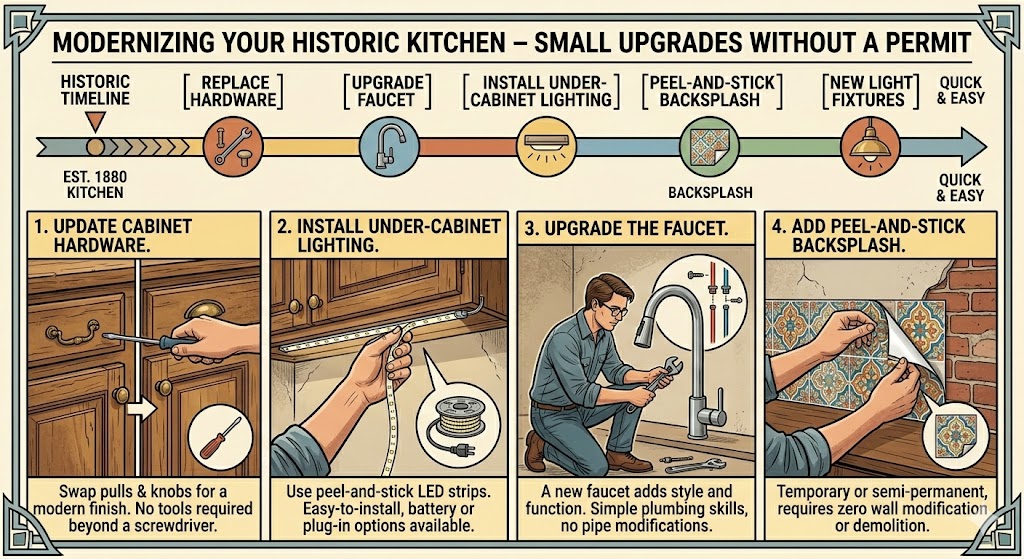
Over time, you can refresh a historic kitchen with paint, cabinet hardware, and lighting swaps that avoid permits; check gas and electrical safety and hire pros for risky work to protect structure and people.
Key Takeaways
Check local building and historic-preservation codes before work; cosmetic updates like paint, cabinet refacing, hardware swaps, and same-size countertop replacements usually don't require permits.
Replace light fixtures and appliances only when using existing electrical boxes or standard plug-in connections to avoid electrical or gas permits.
Refinish or reface cabinets and add open shelving mounted to studs without altering walls or structural supports.
Choose peel-and-stick backsplash tiles and floating vinyl or laminate flooring to refresh surfaces without changing subfloor or structure.
Document changes and use reversible methods so original features remain intact; consult local historic-commission staff when unsure.
Preserving Character While Enhancing Utility
You can maintain original profiles while improving function by swapping worn hardware, repainting with historic-appropriate colors, and adding plug-in undercabinet lighting or slim shelving. Keep repairs reversible so you preserve authenticity, and document original details before work. Surface updates often avoid permits, but verify local codes first.
Preserve sightlines and traffic flow by improving storage and access rather than moving plumbing or walls, since those actions usually trigger permits. Use drawer organizers and shallow pull-outs to increase utility without erasing period details. Avoid altering gas or major electrical systems without a permit.
Identifying Original Architectural Elements
Original trim, built-ins, flooring, and tile show what defines your kitchen's character, so photograph and catalog each element before altering anything. Test paint in hidden areas and salvage hardware for reuse or replication to keep the room's story intact. Historic fabric adds value.
Balancing Period Aesthetics with Modern Needs
Blend period finishes with modern performance by selecting appliances that match the scale and color palette of the era and by hiding vents or modern plumbing behind sympathetic cabinetry. Choose reversible visual updates that maintain the kitchen's historic look while improving daily use. Select plug-and-play upgrades to avoid permits.
Choose panel-ready or retro-styled appliances, low-profile LED fixtures, and surface materials that mimic period textures to meet modern expectations without structural change; you can typically replace countertops and fixtures without permits. Do not relocate gas lines or rewire circuits yourself, and consult a pro when work might affect safety systems.
Maximizing Space with Modular Solutions
Modular shelving and carts let you adapt your historic kitchen without permanent changes; you can reconfigure layouts as needs shift. If you choose pieces with lockable casters, you gain secure mobility and extra prep space, and you must avoid tying them into plumbing or gas to prevent safety hazards.
Implementing Free-Standing Furniture and Islands
Choose a free-standing island sized to your footprint so you add storage and seating without altering original cabinetry. When anchoring tall units, pick models with anti-tip brackets to protect against falls while keeping the work permit-free.
Utilizing Non-Permanent Storage Organizers
Open shelving, magnetic knife strips, and tension rods increase usable storage while preserving historic finishes; you should avoid overloading fixtures because overloading thin plaster can cause costly damage. If you use adhesive-mounted options, opt for tested products suited to the substrate.
Consider pairing adhesive hooks, clear bins, and drawer dividers to keep crucials accessible; choose non-marking adhesives and test weight limits so you protect surfaces and maintain a tidy, reversible setup.
Surface and Backsplash Revitalization
Surface and backsplash updates let you refresh character without structural work; you can use non-permanent options or gentle restoration to honor the original fabric. Check for hidden moisture or loose tiles before covering, and prioritize breathable materials to avoid trapping damp that causes mold.
Applying Temporary Aesthetic Overlays
Peel-and-stick tiles and vinyl overlays give you immediate impact and are removable so you avoid permitting; you should test adhesion on a small area first. Always inspect for substrate issues and avoid covering active mold or failing grout, choosing low-VOC adhesives to protect historic finishes.
Restoring Original Masonry and Grout
Preserve old tile and brick by using mild cleaners, soft brushes, and poultices rather than harsh acids that can erode surfaces you rely on. If you must regrout, match mortar composition and color to the original and avoid waterproofing mortars that trap moisture.
Carefully perform a small test patch and let it cure so you can assess appearance and moisture behavior; use a breathable sealer only where necessary and keep grout joints slightly open to allow evaporation. For safety, wear a mask when removing old grout and call a pro if you find crumbling substrate or persistent damp.
Integrating Modern Technology Discreetly
You can integrate smart controls, wireless under-cabinet LEDs and plug-in outlets that match period finishes without altering structure. Choose concealed hubs and battery-operated sensors so you keep the historic look while adding convenience. Use plug-in or low-voltage systems to avoid permit-triggering electrical work, and do not alter mains wiring yourself – it's dangerous.
Opt for devices with reversible installations—magnetic dimmers, adhesive-backed LED strips, and Bluetooth speakers tucked behind moldings—so you can remove modern tech without damage. Protect original materials by routing cables through existing gaps and using grommets; if a hardwire is necessary, hire a licensed electrician.
Selecting Period-Inspired Countertop Appliances
Choose countertop appliances that mirror historic silhouettes—retro toasters, kettles and mixers—while offering modern safety and energy-efficiency so you maintain character. Prioritize plug-in models with grounded cords and compact sizes to avoid cabinet alterations, and if an appliance needs venting, you should confirm local code before installing to stay permit-free.
Concealing Contemporary Amenities Within Existing Cabinetry
Hide microwaves or charging stations inside lower drawers or behind false backs so you preserve authentic surfaces while adding convenience. Fit appliances into voids without cutting structural elements; avoid removing load-bearing supports and avoid new permanent penetrations that may trigger permits, which can be costly and unsafe.
Trim interiors with removable plywood boxes and soft-close slides to support modern loads while keeping facades intact. You can use rear ventilation slots and mount UL-listed power strips away from sinks to reduce fire and shock risk.
Measure clearances, door swings and airflow for cooling fans so you can ensure concealed appliances run safely; oversized units can overheat or warp cabinetry. Keep modifications reversible and label hidden switches so future owners can service systems without guesswork.
Summing up
Upon reflecting, you can modernize a historic kitchen with small, permit-free upgrades that respect original character while improving function. Focus on surface changes, energy-efficient appliances that fit existing hookups, updated lighting and hardware, and reversible cabinetry tweaks so you retain authenticity and resale appeal. Prioritize safety checks and consult local guidelines to ensure your changes remain compliant.
Ready to refresh your historic kitchen?
Whether it's a simple hardware swap or a careful appliance upgrade, GoHandyFix can help you navigate the do's and don'ts. Contact us for expert advice and keep your kitchen's soul intact.
Related Services
Get Your Free Quote
Plan your permit‑friendly kitchen refresh with our experienced team.